A comprehensive plan for the work of the "Capacity Building Committee" and the training of staff .. Learn details
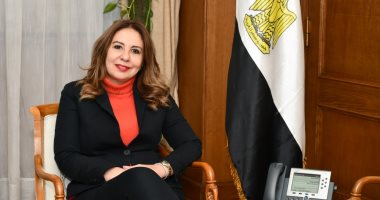
Ghada Labib, Deputy Minister of Planning for Administrative Reform, said that the Committee for Capacity Building and Development continues its work in response to the directives of the political leadership regarding the human development axis in implementation of the sustainable development strategy "Vision 2030".
The strategy aims to raise the efficiency of the administrative apparatus of the state by developing the capacities and leadership and managerial skills of senior and middle management cadres and activating the decision of the Minister of Planning No. 1 of 2019 regarding the formation of the Technical Secretariat of the Higher Committee for Administrative Reform, and its subcommittees such as the Institutional Development Committee, And the Legislative and Financial Reform Committee, as an institutional step complementary to the decision of the Prime Minister No. 1321 of 2017 to form the Supreme Committee for Administrative Reform.
She added that the plan of action of the committee to activate its competencies during the coming period is to participate in the development of the proposal of the plan of training the staff of the administrative system at all levels of the job, in cooperation with several government agencies, including the Ministries of Local Development and Finance, the Central Organization for Management and the National Academy Anti-corruption, and the National Academy of Training. With the preparation of public policies, plans and programs to raise the level of human resources in all areas of the state, and develop proposals to raise awareness of the administrative staff in their role in implementing the strategy of sustainable development, in view of the executive position of the administrative reform plan and the challenges faced by the administrative body.
Ghada Labib stressed that the ministry took into consideration the diversity and complementarity in the formation of the sub-committee for building and capacity development through the participation and integration of various groups of experienced people, youth and academics, and representing the most important scientific and practical entities concerned with administrative reform. The Ministry and its affiliates have always sought to implement the administrative reform plan in full. The Ministry has given great attention to the capacity building axis, pointing to the programs and the preparatory arrangements provided by the Ministry with its training and research arms, which contributed to the development of the institutional development. Increasing the efficiency of human resources and continuing training ensure the sustainability of the system of providing better services to citizens.
She pointed to some important issues to be considered by the committee, such as the mechanism of selection, qualification and training of workers, to make a qualitative leap in the organizational culture of the administrative apparatus of the state, and how to measure the return and impact of training. Stressing the importance of building and developing capacities within the administrative system, with special attention to some topics, such as affiliation and institutional loyalty, team work, emotional intelligence, and also adopted the latest trends in training, including distance training through electronic platforms, which contribute to changing the philosophy of the training system , And provides an opportunity to train more staff in technical, leadership and behavioral skills to improve organizational values and culture, as well as how to improve individual and institutional performance, and overall management performance.
It is noteworthy that the past months witnessed the issuance of Resolution No. 1 of 2019 to form the Technical Secretariat of the Committee for Administrative Reform and its subcommittees, headed by Ghada Labib, Deputy Minister for Administrative Reform, as an institutional step in line with the Prime Minister's Decision No. 1321 of 2017 to form the Higher Committee for Administrative Reform. The Higher Committee for Administrative Reform has several core competencies, including follow-up to the executive program's outputs for transparency and institutional efficiency from the "Egypt 2030 Vision" sustainable development strategy and follow-up of the administrative reform plan, as well as proposals for its implementation.
Related topics
– Ministry of Planning


Post a Comment