"Al-Rifai Mosque" is a burial place for kings and parents and a civilization that draws hearts in Ramadan
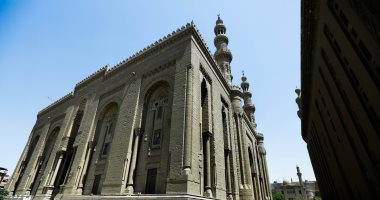
Al-Rifai Mosque, "the tallest building" and the oldest concrete dome in the history of Egypt, and the most impressive in its features is the largest royal cemetery, which is the oldest concrete roof in the history of Egypt, was built "corner of Rifai" buried by Sheikh Ali Abi Shabak Rifai, One of the most famous mosques in Cairo, which turned a large part of the mosque into a royal graveyard, contains the kings of the upper family "Khedive", most notably King Farouk, the last king of Egypt, and his father King Fuad, and the man of cultural renaissance Khedive Ismail, the wives of the royal family, Iran Mohammad Reza Pahlavi.
Al-Rifai Mosque, which is unique in several things, makes you come out of your home for a great civilization. Its history, which dates from time to time and includes the Egyptian royal tombs and the tomb of the Shah of Iran in the Rifai Mosque, has the most royal tombs closed by chains. When nobles and kings, with ignition incense, where the room is covered with marble.
The mosque contains the two tombs of Sheikh Ali Abu Shbak and Yahya Al Ansari, as well as the tombs of the royal family in which Khedive Ismael, his mother Khoshyar Hanem, founder of the mosque, his wives and children, Sultan Kamel and his wife, King Fouad I and King Farouk I.
Although the mosque was named after Sheikh al-Rifai, he was not buried in this mosque. He was not buried in Egypt. His grandson, Sheikh Ali Abi Shabak, was buried there. The mosque was built on top of another mosque known as the Al-Amhara Mosque.
Khosheir Hanim decided to turn this corner and its adjacent buildings into a large mosque, and purchased and demolished all the buildings around it to adopt a mosque in Cairo's largest mosque. It also became a cemetery for Mohammed Ali's family. The edifice built two domes for the sheikhs, a cemetery for her and her grandchildren.
The work continued in the mosque from 1869 and then stopped construction in 1880, to make changes to the design, and then came the death of Khoshaar Hanim in 1885, stopped construction, although buried by the will.
For a quarter of a century, the construction remained suspended, until Khedive Abbas Helmy II took over the throne of Mahrousa, and at that time the director of the Egyptian Antiquities, Hartz Pasha, commissioned the completion of the building of the mosque in 1911. It was opened for prayer in 1912 on Friday, Sultan Hassan mosque, to resemble him in the luxury architecture and size and height.
– خشوير هانم


Post a Comment