Trade war and fees threaten the unity of G20 finance leaders during a meeting in Japan
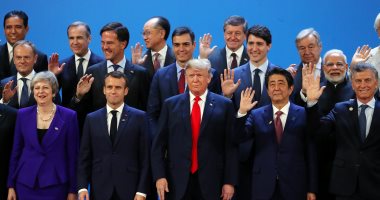
The widening ramifications of a US-China trade war and mounting threats of customs duties are a test of the G20 finance leaders' resolve to show a united front this week as investors worry about whether they can avoid a global recession through declining political means.
Japan, which heads the G-20 meetings this year, said the meeting of finance leaders would not put trade issues on top of its agenda and would not seek to mediate in order to ease bilateral trade tensions. But the increasingly negative effects of the trade war would make it difficult for finance ministers and central bank governors The G20 avoided the issue when they meet for two days starting Saturday in Fukuoka, southern Japan.
A senior Treasury official said trade would be one of the topics that the meeting would address in terms of how it affects the world economy and how to reduce some unfair trade practices that may exist.
Tension over trade may raise challenges for G20 finance leaders to seek common ground on how to shape the issue in the final statement expected after the meeting, the US official told reporters last week. "I expect to have some important talks on trade and other issues. To issue a final statement probably, but no one knows for sure".
US Treasury Secretary Stephen Menuchin will meet with the Governor of the People's Bank of China (Central Bank) Yi Gang in Fukuoka, on the sidelines of the G20 meeting, and Menuchin will also hold talks with Japanese Finance Minister Taro Aso.
Relations between the United States and China have deteriorated since US President Donald Trump accused Beijing in early May of reversing its commitments to change its trade practice with the rest of the world. The United States imposed customs duties on Chinese imports and threatened to impose new duties. The global financial markets have been shaken by the escalation and have caused worldwide losses of over $ 1.5 trillion in investments, raising fears of a global downturn..
Trump said on Thursday he would meet with President Xi Jinping at the G20 leaders' summit this month and then decide whether to impose further fees on Beijing. While many sectors of the global economy are still recovering from the global financial crisis 10 years ago, The focus shifts to the size of the monetary reserves left by the central banks for the next decline.
Policy makers at the Federal Reserve said they would be willing to cut interest rates and the European Central Bank on Thursday opened the door to more stimulus if needed..
The International Monetary Fund (IMF) warned on Wednesday that the fees imposed by the United States and China, which threaten to impose them, could reduce global economic output by half by 2020. Fund director Christine Lagarde told Reuters that there was no imminent threat from A global recession But the threat of imposing such cartoons and trade wars as "self-inflicted wounds" must be avoided.
(t) IMF (t) Global Financial Crisis (t) European Central Bank (t) US Treasury Secretary (t) People's Bank of China (t) Central Bank Governors


Post a Comment